At a time when the world is changing, a moment where the creative industries feel stressed, or even under attack, it’s important to remember that good art doesn’t come without struggle. I’m not suggesting for one minute that the difficult times we all face are a good thing, but rather remembering that when life throws you a shit sandwich, you can channel it into making something with real substance. After all, it’s the rebels, the dreamers and the most enduring artisans that leave a lasting mark.
Making art, whether it’s oil paintings, music, TV ads, or film, is hard. This difficulty seems to be grafted into the DNA of creativity itself. In turn, feeding the ever-hungry beast its fill of struggle and strife, in order for the contract to be honoured and for the creative juices to flow.
A wise old filmmaker once told me that every project that makes it into a cinema, no matter how big or how small, is an absolute miracle. They also said that persistence is almost always your most important attribute. The lucky few to have ‘made it’ are usually the last people in the room that are yet to quit. I always took this with a pinch of salt, until I didn’t. In 2024/25, I took an idea from a brief concept on an iPhone note, to a film that played in one of the world’s most famous theatres. Was this a miracle? You’re damn right it was.

Brad Brookes, Screenwriter + Filmmaker
At a time when the world is changing, a moment where the creative industries feel stressed, or even under attack, it’s important to remember that good art doesn’t come without struggle. I’m not suggesting for one minute that the difficult times we all face are a good thing, but rather remembering that when life throws you a shit sandwich, you can channel it into making something with real substance. After all, it’s the rebels, the dreamers and the most enduring artisans that leave a lasting mark.
Making art, whether it’s oil paintings, music, TV ads, or film, is hard. This difficulty seems to be grafted into the DNA of creativity itself. In turn, feeding the ever-hungry beast its fill of struggle and strife, in order for the contract to be honoured and for the creative juices to flow.
A wise old filmmaker once told me that every project that makes it into a cinema, no matter how big or how small, is an absolute miracle. They also said that persistence is almost always your most important attribute. The lucky few to have ‘made it’ are usually the last people in the room that are yet to quit. I always took this with a pinch of salt, until I didn’t. In 2024/25, I took an idea from a brief concept on an iPhone note, to a film that played in one of the world’s most famous theatres. Was this a miracle? You’re damn right it was.
This is the story about how a 30-minute post-apocalyptic thriller became a festival favourite, won a variety of awards and spawned a series of other projects which are all now in various stages of development. Our short film Going (2024) is about a middle-aged couple travelling the Cotswolds in a campervan. Outside, the world has ended, but only one of them knows it.
As a writer and producer, I cut my teeth in TV promos before moving into advertising and then, a little later, into film. I’d always found myself in a supporting or advisory role in TV and film projects. I’d be offering production advice, crafting campaigns or doing rewrites on buddies' scripts, but never steering the ship myself. I’d had a front row seat to experience the stresses and pitfalls of being one of the people with their hands on the teller, but had never had to take on that load personally.
Insert quote here with nice text and a subhead. Lorem ipsum dolor set amuer. Rebel Future was founded to be a creative run business in a creative space.
My journey started off with a simple nugget of what I thought might make a great short film. I developed the script with the intention of entering it into film festivals as an unproduced screenplay to attract attention, funding and collaborators. When my script was complete, this is exactly what I did, and it went well. After winning several awards, watching a bucket load of short films and getting a feel for the lay of the land, I reached out to a filmmaker I’d met briefly on the circuit and had very much enjoyed watching his work.
Rupert Ratcliffe at Manticore Films read the script and loved it. We decided to collaborate on the project, signed an option agreement with me as writer, him as director and the two of us as co-producers. Then we got to work.
Initially, we tried to find public funding for the film. With a diverse team and a story with a socially minded narrative, we thought we would be rolling in offers. We weren’t. Traditionally, this is a huge stopping point for a hell of a lot of projects, and they just peter out, disappearing into the ether.
After coming to terms with the worryingly sparse pools of public money available, we found ourselves turning toward private investors.
We networked hard at film festivals, industry mixers, lunches, parties and reached out to contacts we hadn’t spoken to in years. We were gobsmacked at how many people showed interest in the project and found ourselves getting closer to snagging the full budget with every conversation we had. The more people we talked to and shared our enthusiasm with, the more potential partners we discovered.
Now, the benefit of private money is that the film becomes majorly funded by people who love the script and simply want to see it made, unencumbered by any of the other requirements that public funders might have to fulfil. The slightly stressful downside to private investment is that you are literally playing with a large amount of other people’s money.
Although we both firmly believed that without risk, there would be no reward, we also agreed not to fuck it up.

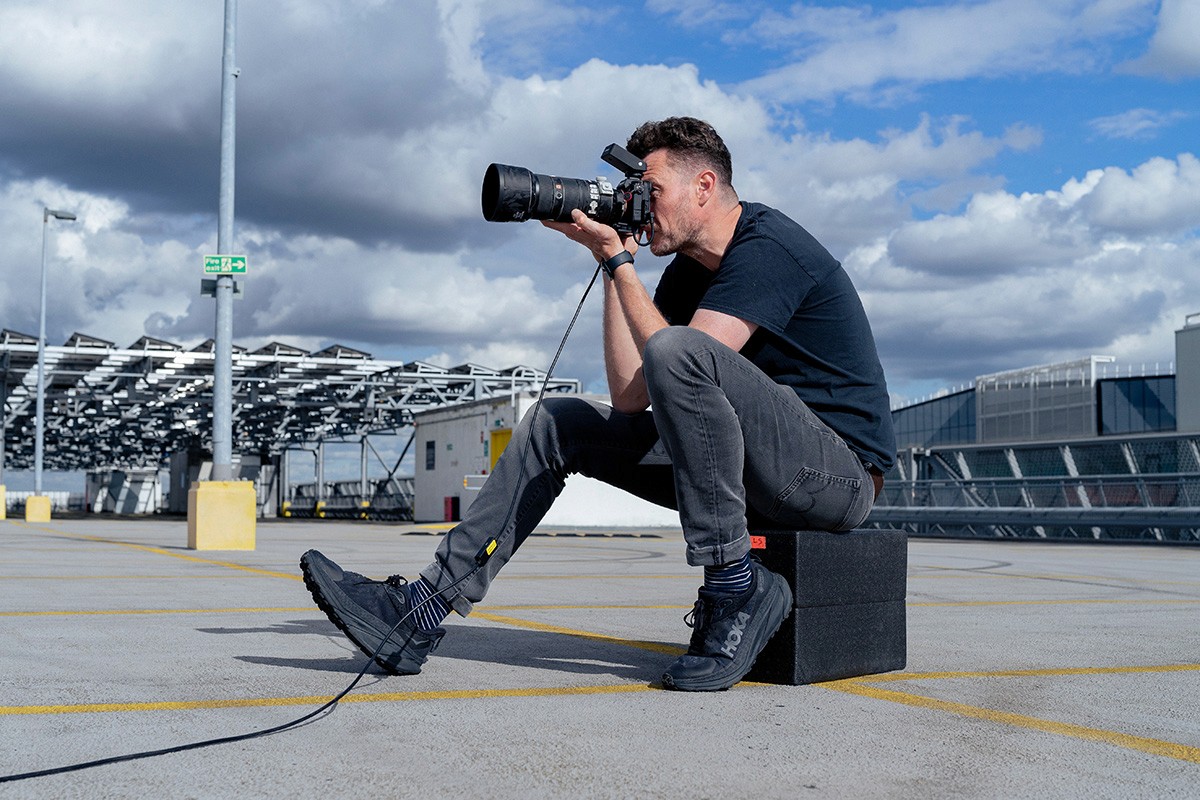


Brad Brookes and his team out in the English countryside
Brad Brookes, Screenwriter + Filmmaker
Insert quote here with nice text and a subhead. Lorem ipsum dolor set amuer. Rebel Future was founded to be a creative run business in a creative space.
Once the funding was in, we turned toward putting the cast and crew together. Again, this became a process of speaking to the few people we knew, reaching out to talent agencies, and knocking on endless proverbial doors. Although this process wasn’t painless, we found that our enthusiasm for the project and faith in the subject matter were key to engaging agents, the real gatekeepers of the talent.
After building a stunning cast, which included Genevieve O’Reilly (Star Wars) and Nicholas Pinnock (For Life, Heavyweight), we scheduled the shoot and plunged into pre-production. We built a crew, secured locations, applied for road closures, arranged accommodation, catering, transport, action vehicles, and then we cancelled everything - twice.
Filming on a shoestring budget is very much a double-edged sword. If you pull it off, the rewards of making a good film can come at a much lower cost. However, when you’re working with high-level cast and crew, you are at risk of anyone landing a big film or TV show and needing to leave the project.
This is the second inflexion point that so many indie films hit and then disappear forever. Your best laid plans can fall like dominoes when an integral part of the team needs to reschedule. This can demolish your budget and derail the project permanently.
I’ve heard people use the analogy of pushing a boulder up a hill when referring to filmmaking. I’d very much agree with this until you finally get into production. When the camera is ready to roll, it's much more like letting the boulder career back down the hill while making attempts to correct its trajectory so it doesn’t smash into anything on the way to the bottom.
But when our boulder was about to skip off the hill entirely, our lives could have been a lot easier if we had just let it go. But with the advice to be persistent ringing in our ears, we chose to keep pushing on. Yes, we had to have a few difficult conversations with suppliers, crew and equipment hire companies, and we lost a few key members of the team along the way, but we knew the project was worth the graft.
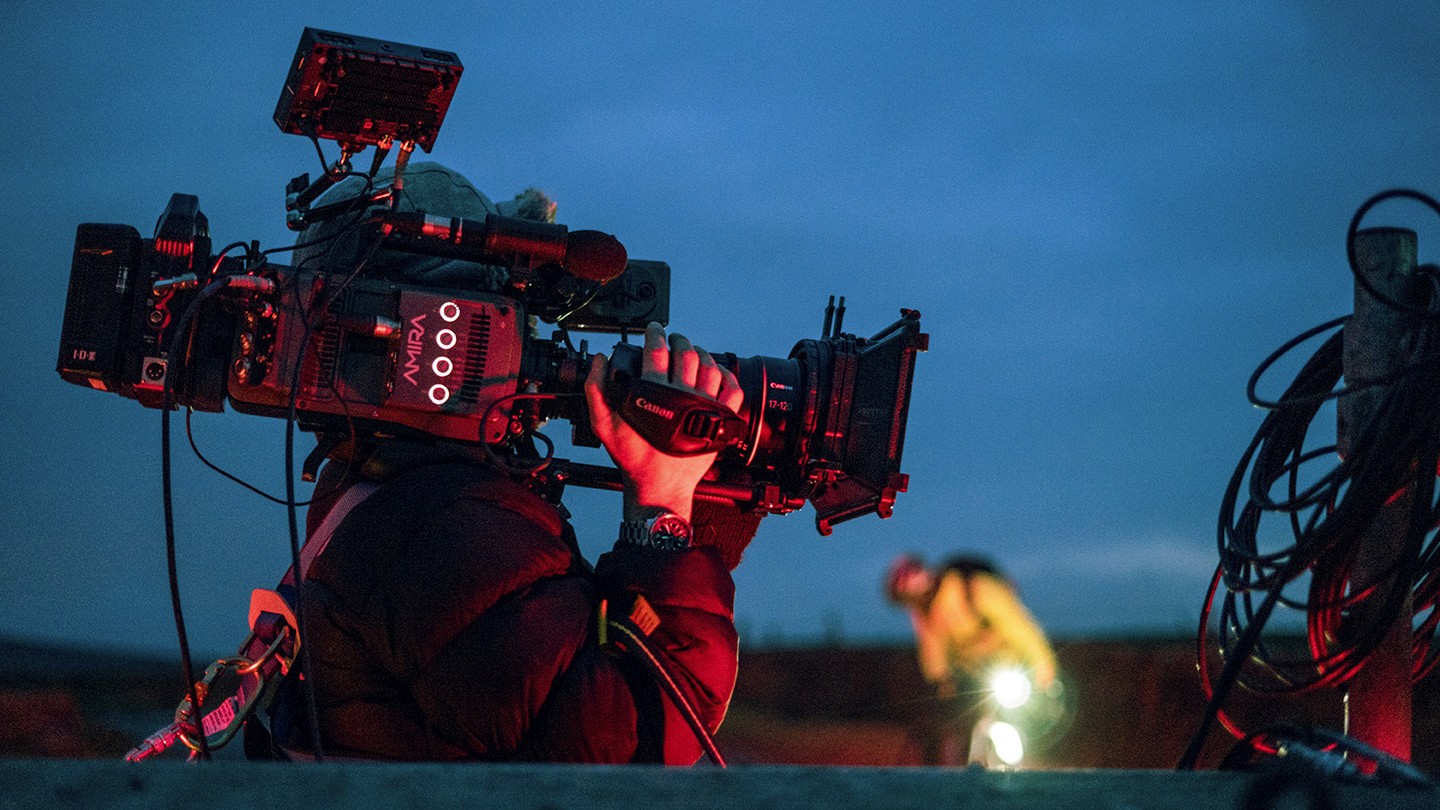
And finally, in a small window between other work commitments, the Hollywood strikes and endless bouts of bad weather, we hit the valleys of the West Country and got the cameras rolling. Now, to keep this article from turning into a sonnet, I’ll skip over the story of the shoot relatively quickly. As anyone who’s ever visited a film set knows, there are enough trials and tribulations in each day to write a book about, and our shoot was no different. From vehicle issues to dwindling daylight and equipment failure, our meatgrinder experience continued. But when we finished shooting on our fifth and final day, we knew we’d got something.
Brad Brookes, Screenwriter + Filmmaker
The feeling we had was reflected in the post-process, when we began to approach a variety of companies that might want to engage with the project. When most of the answers were a resounding yes, even from our dream collaborators, we threw everything we had into finishing the film and getting it to film festivals for consideration.
When we finally hit the festivals, we got out of the gates with a bang, premiering at an Oscar-qualifying event in the States. Then, over the next 12-months then went on to win a variety of awards, qualify for both BIFA and BAFTA consideration and show the film to some huge audiences across the world. The festival circuit can be bittersweet. At some festivals, you’ll be crowned and anointed as the next big thing, and then at others, you won’t even get selected first place. The stories of needing to grow thick skin in the film industry are never truer than when you’re facing rejection from the custodians of it.
Then, after almost a year of showing the film, we got the call, and we were suddenly off to Hollywood. An Oscar qualifier based out of the Chinese Theatre on Hollywood Boulevard had selected us to screen there. Now, as you’d expect, a visit to Tinsel Town became packed with meetings, lunches, parties, PR pitches and the like. But all of these ‘living the dream’ moments paled in comparison to the screening. If you are unfamiliar with the Chinese Theatre, it’s safe to say that it’s the most famous cinema in the whole world. The original Star Wars premiered there in 1977, as did many other classics from the blockbuster era. As a film nerd little boy, I’d been aware of the haloed building my entire life, and now I was showing my own film there.
With all the driverless cabs, glamour and industry opportunities you could shake a stick at, the Hollywood Hills contrasted heavily with the Cotswold valleys in which our film was set. But this only helped amplify the story for the audience - and it went down a storm!
We screened to a sell-out of almost 500 people, and needless to say, it was a life-affirming experience. With a crowd that big, you get to hear the reactions to every scene. Organic ripples of emotion giving you live feedback to the peaks and troughs of a movie you put up on that screen yourself. It’s always special to see your work go out on the big screen, but this time felt special. Like a watershed moment of the film’s world tour.
We’ve far from ‘made it’ at this point. The project itself is still moving along. We have developed the short into a feature and are currently pitching to investors and studios. Although Going has seen its fair share of success, the work is far from done. With that sage advice still driving us, if we are going to make a success of it, we just need to keep moving forward, one foot in front of the other. You can get off the ride whenever you like, you’re never trapped, but if you want to leave a creative mark in any industry, it’s not going to happen overnight.
To finish, I’m going to hit you with a list of platitudes and cliches that might sound silly, even derivative. But if you’re going to climb that hill to Hollywood (or any other creative mecca), these are the kind of rules that you should be scrawling on a Post-it note and sticking it to your bathroom mirror.
Don’t wait for permission,
There's no clear path laid out for you,
Believe in the work,
This is a team game, surround yourself with the right people,
Harness the energy of frustration,
When you get a no, don’t stop, keep looking for a yes,
It’s a marathon, not a sprint,
Success can come from being the only one left in the room.
Now - Go get ‘em.